Get Connected
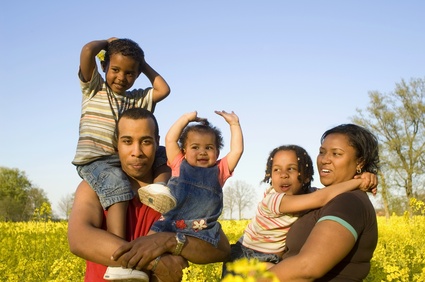
Many forces in our society pull families apart. Each family member becomes involved in their own activities, pursuing their individual interests and individual growth. Unfortunately, this can easily result in a disconnected family. Even together, we find each person pursuing their own experience as they sit together in the same location: one listens to their own music, another plays their own game, while another listens to their podcast, and another texts a person in another town.
Disconnection is not good for us. We are designed to connect, for form relationships. We feel better when connected. Yet one in 6 Americans feel lonely or isolated most of the time. Twenty seven percent of Americans lack reliable social support and 45% say they don’t trust others. We live in a disconnected society that threatens to disconnect us from our families.
Fortunately, Six Points of Connection has identified 6 behaviors that help people connect. You can access these “6 behaviors” in a variety of social settings such as religious involvement (church), volunteering, and social groups. I encourage you to get involved in some social setting that will help you increase your connection. However, for the purposes of this blog I want to emphasize how family provides the opportunity to engage in these 6 behaviors to build greater family connection and intimacy.
- Neighborhood Contact involves knowing and interacting with the people around you. In the family we might just refer to this as contact, interacting with each family member in order to know them and their interests better. In other words, learning the “stats” of each family member and then implementing that knowledge in ways that will help build greater intimacy.
- Community of Identity develops when we belong to a group of people brought together by shared experiences or shared values. Families build identity by creating rituals around family values. For instance, eating a meal together each day or attending religious services together are rituals that build a “community” of common identity. Other rituals might include the joy of bike riding, volunteering together, or engaging in various holiday rituals. When you engage in rituals that flow from your family’s values, you nurture a community of identity within your family.
- One-on-One Relationships compel us to make the time to nurture closeness and intimacy with one another. It is important that family members spend time with one another. We learn about one another and grow closer to one another by engaging in activities with one another.
- Third Place offers us the opportunity to interact in social spaces outside the home, to interact with people in a variety of settings, in the “third places.” Enjoy times with your family outside your home. This might include enjoying vacations together, taking a trip to local sites like the zoo, the museum, or a baseball game, or simply going out for ice cream. Enjoying activities outside the home can provide many wonderful opportunities to connect.
- Community of Play allows us to relate together during shared activities we all enjoy. One of the best ways to connect with family is through play. You may have heard it said that “you can discover more about a person in an hour of play than in a year of conversation.” Enjoy time engaging your family in play…and enjoy the intimacy and strength of relationship that grows from that play.
- Community of Service means that we show up for one another when a need arises. We grow more connected with those we trust. We trust those who are there for us when a need arises. Nurturing a community of service within the family answers one of the most important questions asked but never spoken in our family relationships: “Can I trust you to be there for me?” So, build a community of service within your family. Begin by modeling service yourself.
These 6 actions can help you and your family feel more connected to one another. And that will add joy to your family.
-0 Comment-