The Family Economy of Christmas
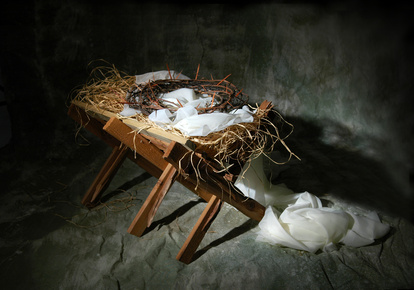
Have you ever thought about your family economy? Family economy represents our expectations about each member’s contribution to the family and the compensation they receive in response to that contribution. We generally don’t think about it, but consider these common statements heard in families:
- “If you finish your vegetables you can have dessert.”
- “You have to clean your room before you go out.”
- “I put a lot of time into this dinner; you need to eat it.”
- “If you live in this house, you need to help keep it clean.”
- “I do so much around this house and you can’t even pick up your socks?”
You get the idea. None of these statements are necessarily inappropriate or wrong. We make them in an effort to teach our children how to become responsible adults. We make them to our spouses to express our desire for mutual respect and contribution to the household. But, these statements implicitly establish our expectation that the work we do, and the work our family members do, will result in appropriate and well-earned compensation. Other statements extend that expectation beyond the family walls.
- “Work hard at school so you can get a good job.”
- “Practice every day so you can be the best and earn that scholarship.”
There is nothing wrong with hard work. Hard work does bring about greater chances of success. But the implicit message is that you get what you earn. Although there is truth to that message, Christmas reminds us of a different economy, one that God has declared for centuries. One in which, thankfully, we don’t always get what we deserve.
The family economy God offers, and Christmas reminds us of, is one of gracious gift giving. Think about it:
- “God so loved the world that He gave us His only begotten Son so that whoever believes in Him may have eternal life.” What did the world do to earn the gift of God’s Son? Nothing. In fact, Romans tells us we were still helpless enemies of God at the time (Romans 5:6-11). His Son was a gift given to helpless enemies.
- “To us a Child is born, to us a Son is given…” (Isa 9:6).
- We know that in the gift of this Baby on Christmas, we are “justified as a gift by His grace through the redemption in Christ Jesus” (Romans 3:24).
- The gift of Jesus on Christmas is the beginning of “the free gift of God that is eternal life in Christ Jesus our Lord,” the Baby whose birth we celebrate at Christmas (Romans 6:23).
Christmas reminds us that God offers our families a gift economy, an economy based on gracious gift giving. I say it “reminds us” of this because God has always employed the gift economy in relation to His people.
- He gave life to humanity at creation, complete with all the interdependent relationships that made life “very good.”
- He gave humanity a garden in which to live and food within that garden to eat.
- He gave Abraham a son.
- He gave Joseph a dream and the ability to interpret a dream that saved the world.
- He gave manna in the wilderness…and quail.
- He gives rain and sun, food and water.
He gives and gives and gives some more. Christmas is a reminder that God gives. He runs a gift economy.
- He gave His Son…who gave His life, to open the door for us to be part His family, His Kingdom.
- He gave forgiveness and life through His Son, allowing us to live eternally in His Beloved Community.
- He gave the Holy Spirit to dwell in us and seal us for an eternity in His Kingdom.
The early church, as a representative of the gracious gift-giving King they represented and as members of the Kingdom based on the economy of gift giving, made gift giving a priority as well.
- They gave from their surplus so no one among them had need.
- They gave to Christian brothers and sisters in other areas of the world when famine struck.
- They were known as people of love, graciously giving their time and energy to the sick, disenfranchised, and marginalized.
- They lived out an economy of gift giving.
Christmas brings this to mind and causes me to ponder. How can I build my family on the gracious gift-giving economy of God and His Family? How can I extend the gift-giving economy of God to my family and all those we meet? Perhaps we begin by giving ourselves to our spouses and our families. Give our family our time, the best of our energy, our emotional openness and connection, our encouragement, our support, our love, our very lives. That will be a Christmas gift they will never forget.
-0 Comment-